

Sea Gastronomy as the Art of Survival – The Shared Soul of Kriti Ruby and Fishkardo
The sea does not forgive mistakes — and yet, it teaches gentleness.
It strips away excess, demands precision, and rewards only those who respect its rhythm.
That same rhythm defines the cuisine aboard the Kriti Ruby, a vessel that has turned survival into an art form — and that art into inspiration for the haute-sea gastronomy of Fishkardo.
Where land-based chefs have seasons, markets, and stillness, the cooks of the Kriti Ruby have motion, wind, and salt.
Their kitchen is a moving universe — steel, fire, and heart.
And from that relentless discipline emerges a philosophy:
cooking is not about luxury, it’s about endurance.
The Taste of Continuity
Aboard the Kriti Ruby, food is not entertainment.
It is structure.
It keeps the crew grounded when the world is fluid.
The repetition of peeling, chopping, simmering — these gestures become rituals of sanity in a place where time has no horizon.
This is the essence that the chefs of Fishkardo sought to capture: not the recipes themselves, but the continuity they represent.
When a sailor stirs a pot while the ship trembles under a storm, he is defending order against chaos.
When the restaurant’s chef plates a dish with surgical precision, he is doing the same — only his storm is silence, perfection, and expectation.
Both crafts are acts of control against the unpredictable — and that, ultimately, is survival.
The Fire That Never Sleeps
In the engine room, steel pulses with heat.
Above it, another engine burns — the stove of the ship’s kitchen.
Its flame is never off; even when the sea rages, it keeps its small defiance alive.
That same fire lives inside Fishkardo.
In the kitchen of the restaurant, stainless counters mirror the hull of a ship, and the hum of precision knives echoes the heartbeat of engines.
Every reduction, every stock, every sear is an echo of maritime persistence.
At Kriti Ruby, the flame means life.
At Fishkardo, it means legacy.
Salt: The Philosopher of the Sea
If there is one ingredient that unites Kriti Ruby and Fishkardo, it is salt — not the culinary kind, but the philosophical one.
Salt purifies, preserves, punishes.
It is the element that transforms perishability into permanence.
For sailors, salt is discipline: it corrodes everything careless.
For chefs, salt is truth: it exposes balance and flaw alike.
When the Fishkardo team began designing their “Maritime Essence” menu, they followed this belief.
No unnecessary garnishes, no flourishes.
Only essential flavors — salt, citrus, smoke, and time.
Each plate whispers what the Kriti Ruby cooks live every day: simplicity is the hardest luxury.
Waves, Knives, and Faith
Cooking at sea demands faith.
The pan slides, the knife trembles, the pot overflows.
A dish can be lost to a sudden roll of the ship — yet the cook continues, steady, focused.
That kind of discipline cannot be taught in culinary schools.
It is learned between storms.
And that is why Fishkardo’s cuisine feels alive: it is animated by the same pulse of the sea — imperfect, raw, persistent.
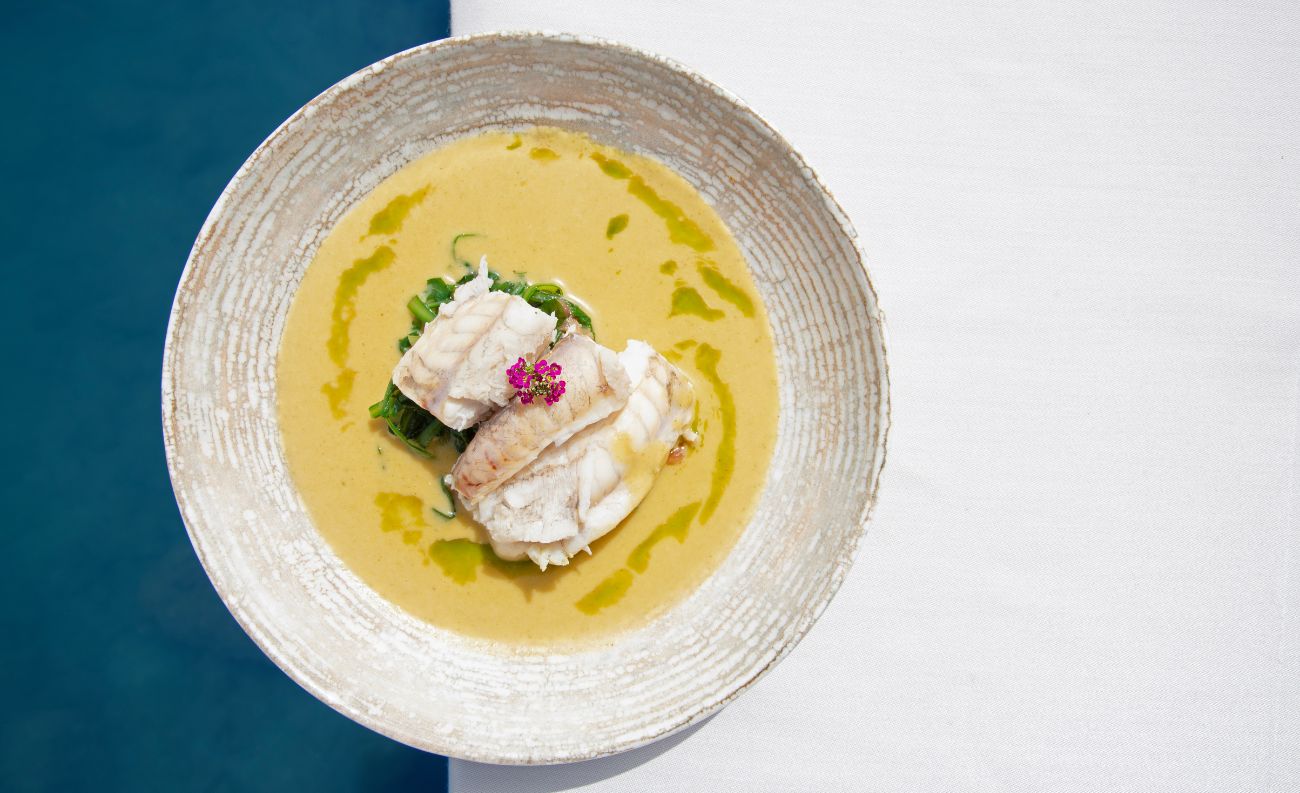
When guests at Fishkardo taste the “Sailor’s Symphony” — a slow-poached grouper with smoked mussel essence and sea fennel — they are not just eating fish.
They are tasting resilience.
They are tasting the faith of someone who learned to hold a pan steady while the world tilted.
The Quiet Perfection of the Sea
The sea is both chaos and geometry.
It carves storms and also draws perfect lines of horizon.
This duality is what defines Fishkardo’s aesthetic — dishes that appear serene, yet contain the energy of tempests.
One of the restaurant’s signature creations, “The Calm After”, was born from a story sent by the Kriti Ruby’s chief cook:
a night when the storm ended abruptly and the ocean turned silver, and he cooked fish stew with lemon and pepper for the crew in complete silence.
The Fishkardo version is a minimalist composition — turbot steamed in seawater, a veil of lemon foam, a single drop of olive oil aged in oak.
It’s not a reproduction.
It’s a translation — from survival into serenity.
The Aesthetics of Scarcity
Luxury is easy. Scarcity is art.
The Kriti Ruby’s kitchen operates with finite ingredients — limited storage, shifting climates, unpredictable supplies.
And yet, its cooks transform the minimal into the memorable.
Fishkardo’s chefs studied that creative economy.
They learned how to replace abundance with intention: how to make one anchovy speak louder than ten oysters, how to make steam carry memory, how to let absence taste like depth.
That is why the restaurant’s “Mariner’s Minimalism” tasting menu feels simultaneously grand and humble.
It’s not an imitation of the sea’s cuisine — it’s an homage to the dignity of doing more with less.
Hands That Feed the Ocean
Every sailor remembers the smell of onions caramelizing at dawn.
It’s the scent of home in a place that moves.
The cooks of the Kriti Ruby know this better than anyone.
They are the first to wake and the last to sleep.
They feed the vessel, literally and spiritually.
At Fishkardo, this invisible devotion becomes visible.
Every line cook knows the names of the Kriti Ruby’s galley team.
Some dishes are even named after them — “Alexis’ Horizon”, “Chen’s Current”, “Makarios’ Flame”.
It is a quiet acknowledgment that great food, like great navigation, depends on unseen hands.
Survival as Elegance
There is a peculiar elegance in the way sailors adapt.
A cracked plate becomes a serving tray.
A rope becomes a shelf.
A metal pot doubles as a baking pan.
The same spirit breathes inside Fishkardo’s plating philosophy.
The restaurant’s artistic minimalism is not aesthetic for its own sake — it is survival elevated to elegance.
A drizzle replaces a sauce.
A trace of charcoal replaces a crust.
The result is restraint that feels infinite.
When critics describe Fishkardo’s cuisine as “hauntingly pure,” they unknowingly describe the essence of life aboard Kriti Ruby — a beauty carved by endurance.
Sound, Silence, and the Grammar of Taste
On the ship, sound is constant — the low growl of the engine, the hiss of steam, the slap of waves.
In the restaurant, silence reigns — the soft murmur of conversation, the distant chime of cutlery.
Yet both are languages of rhythm.
Fishkardo’s executive chef once said,
“When I plate a dish, I hear the ocean — not as noise, but as grammar.”
That grammar comes directly from Kriti Ruby’s daily symphony: repetition, harmony, contrast.
It is why every Fishkardo experience feels composed rather than constructed.
It’s music, written in flavor.
The Philosophy of the Horizon
Perhaps the greatest lesson that the Kriti Ruby gave to Fishkardo is the meaning of the horizon.
For the sailor, it’s a promise.
For the chef, it’s a limit.
But for both, it’s an invitation to go further — to taste what lies beyond.
This shared horizon is why Fishkardo’s menu changes constantly.
Not to follow trends, but to follow currents — both literal and metaphorical.
Every dish that leaves the pass is a voyage: an arrival and a departure at once.
Conclusion – The Art of Survival Becomes the Art of Living
In the end, the cooks of the Kriti Ruby and the chefs of Fishkardo share a single truth:
to feed is to protect.
At sea, it means keeping the crew alive.
On land, it means keeping memory alive.
Fishkardo does not imitate the Kriti Ruby.
It translates it — turns its endurance into elegance, its struggle into symmetry, its simplicity into poetry.
Every flavor on the plate carries a fragment of that maritime philosophy:
the discipline of salt, the humility of heat, the courage of creation in motion.
So when a guest at Fishkardo tastes the foam of sea urchin, or the slow-braised octopus in ink and citrus, they are not merely tasting cuisine.
They are tasting the art of survival — distilled, refined, eternal.
Leave a Reply