

The Ports of Memory – How Kriti Ruby’s Global Journeys Inspired Fishkardo’s Oceanic Map of Flavors
Every ship is a moving diary, and every port is a chapter written in scent, heat, and sound.
The Kriti Ruby, in its ceaseless movement across the world’s oceans, has gathered more than cargo — it has gathered flavor.
And those flavors, shaped by distance and longing, now live again in the kitchens of Fishkardo, where the sea becomes memory, and memory becomes cuisine.
What follows is not a menu.
It is a map of taste, charted by the journeys of a vessel and translated by chefs who see the ocean as their pantry and poetry as their compass.
Marseille – Where the Sea Speaks French
The Kriti Ruby first reached Marseille in late autumn.
The port smelled of salt, diesel, and bouillabaisse — that sacred blend of rockfish, saffron, and garlic that defines the Mediterranean’s culinary soul.
The ship’s cooks stood on the quay, sampling the broth served by a weathered fisherman whose ladle had seen more storms than their vessel.
That night, aboard the Kriti Ruby, they recreated their own version: rough, improvised, glorious.
No saffron, but turmeric; no monkfish, but whatever the nets had offered.
The flavor was imperfect, yet alive — the kind of taste that teaches you humility.
Years later, at Fishkardo, that moment became “Marseillaise Tide”:
a modern bouillabaisse distilled into its essence — a clear amber broth poured tableside over morsels of monkfish, scorpionfish, and octopus confit, perfumed with a single strand of saffron and a whisper of anise.
It’s not a recreation.
It’s an act of remembrance.
Piraeus – The Taste of Homecoming
No matter how far the Kriti Ruby sails, every voyage ends — or begins — in Piraeus.
For the crew, this port is not just geography; it’s gravity.
The taste of grilled sardines, the sharp squeeze of lemon, the metallic tang of ouzo on an empty stomach — these are not flavors, they’re reunions.
Onboard, the ship’s cooks pay homage every time they serve their most humble meal: freshly caught fish, olive oil, salt, bread.
No ornament, no pretense.
In that simplicity, every sailor finds the homeland again.
The Fishkardo interpretation of Piraeus is “The Home Port Dish” — a wild sea bream roasted on olive branches, finished with lemon foam and thyme oil.
Served without garnish, it arrives on a warm ceramic plate colored like aged terracotta, echoing the piers of Zea Marina.
It’s a dish that asks for silence, not applause.
Alexandria – Spice and the Echo of Empires
When the Kriti Ruby docked in Alexandria, the air was heavy with spice and memory.
Cumin, cardamom, sesame, sumac — each carried stories older than the sea itself.
The cooks traded canned goods for fresh herbs, shared laughter with the local fishmongers, and learned the Egyptian secret: that every dish needs contrast — sweet against sharp, hot against cool.
That night’s onboard meal became legend: fried red mullet with honeyed tahini, mint, and lemon peel.
A sailor’s improvisation, a philosopher’s balance.
At Fishkardo, Alexandria’s influence endures in “Amber Sands” — red mullet fillets glazed with date molasses, paired with smoked sesame, preserved lemon, and coriander caviar.
It’s the taste of civilizations layered like sediment — delicate, golden, eternal.
Dubai – The Geometry of Modern Flavor
In Dubai, the Kriti Ruby met the future.
Towering cranes mirrored the masts, and the scent of oud mingled with diesel.
Markets brimmed with saffron, dried lime, and rosewater; restaurants fused East and West in seamless choreography.
For the ship’s cooks, it was a revelation — the realization that tradition and innovation could share the same plate.
That a dish could honor the past while speaking tomorrow’s language.
From that spark came the Fishkardo creation “Desert Current”:
seared sea bass brushed with rosewater glaze, served with spiced lentil dust and a translucent sheet of saffron glass.
It gleams like the skyline at sunset — a dish where maritime humility meets architectural precision.
Singapore – The Compass of Complexity
Singapore was a sensory onslaught — chili, ginger, palm sugar, and tamarind swirling through the humid air.
The Kriti Ruby’s galley turned into a laboratory that week.
Miso met lemongrass, soy met olive oil, and suddenly, the crew discovered that flavor, like the sea, knows no borders.
At Fishkardo, this port inspired “The Equator Dish”:
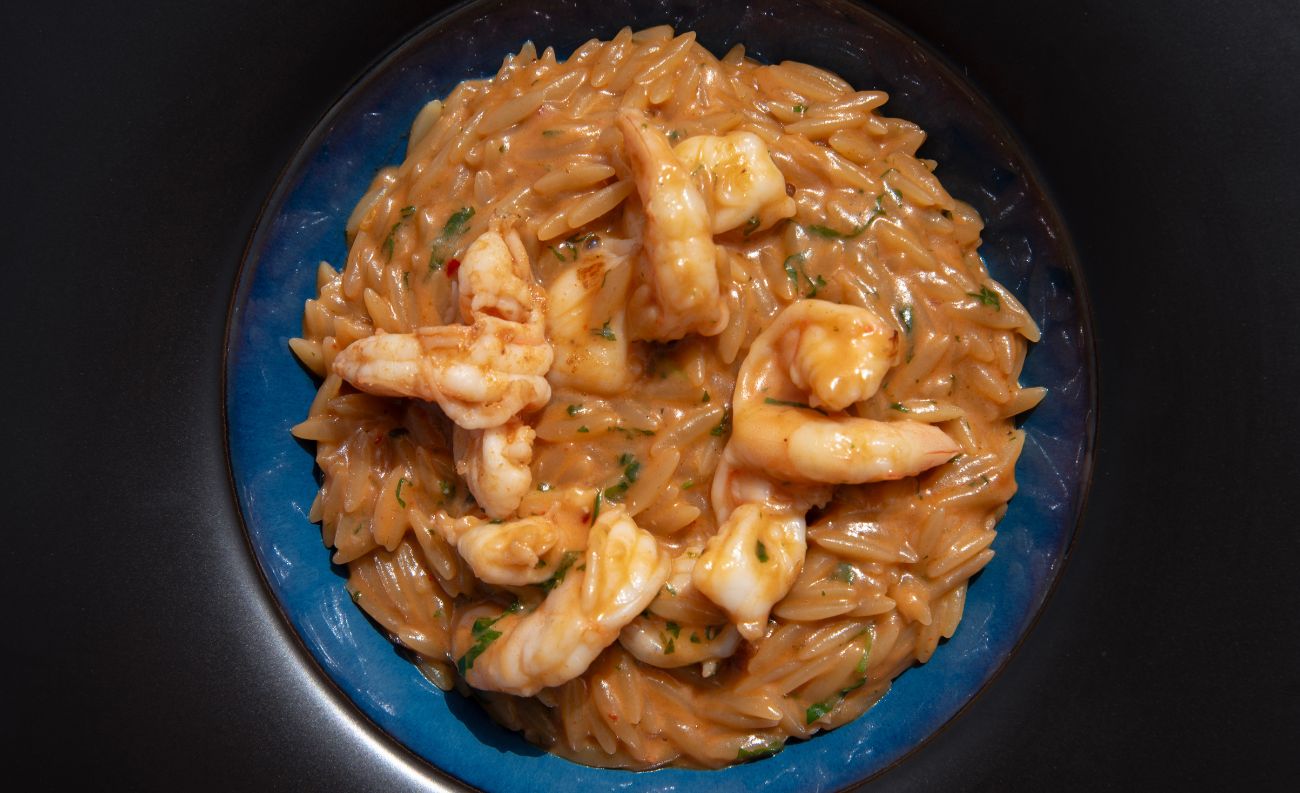
carabinero shrimp poached in coconut milk with ginger, lime, and a hint of Cretan raki — a conversation between oceans, a treaty between heat and harmony.
The plating resembles a maritime chart: circular, balanced, alive.
As the executive chef said,
“Singapore taught us that taste is navigation — and our compass is curiosity.”
Tokyo – The Discipline of Purity
Japan changed everything.
In Tokyo, the Kriti Ruby’s cooks watched a sushi master spend ten minutes wiping a blade before a single cut.
They saw reverence, not performance.
They realized that purity is not the absence of flavor, but the concentration of truth.
Back on board, they practiced the ritual: cleaning, sharpening, slicing in silence.
From that discipline came the seed of Fishkardo’s most acclaimed dish, “Still Water.”
A single scallop, raw, brushed with ponzu and a droplet of thyme oil.
Served on ice, under a thin veil of kombu smoke.
It tastes like calm.
It tastes like a pause in the storm.
New Orleans – The Gospel of Excess
From silence to jazz — the Kriti Ruby next found itself in New Orleans, where cooking is celebration, not restraint.
The crew discovered gumbo, jambalaya, and the unapologetic joy of spice and fat.
They danced while stirring, sang while frying, laughed while burning.
It was the opposite of the sea’s austerity — and precisely what their spirits needed.
Fishkardo turned that memory into “The Gospel Plate”:
blackened tuna with Cajun crust, bourbon glaze, and sweetcorn puree kissed by smoke.
A hymn of abundance, served with the grace of restraint — chaos made elegant.
Cape Town – The Fire Beneath the Wind
In Cape Town, everything tastes of fire — the air, the food, the sea itself.
Here, grilling is prayer.
The Kriti Ruby’s cooks learned from dockside braai masters how to cook fish not on the fire, but with it — letting smoke and salt dance together.
That lesson became “Southern Flame” at Fishkardo:
grilled yellowtail, brushed with citrus butter, served with ashes of leeks and a drizzle of smoked olive oil.
It’s not a barbecue — it’s combustion turned to poetry.
Reykjavík – The Whisper of Ice
Then came silence again — the kind of silence that freezes.
In Iceland, the Kriti Ruby entered waters so cold they glowed blue.
There, the cooks learned the language of rawness: fish so fresh it needed nothing, only respect.
They tasted cured cod dried by arctic wind and discovered that flavor can be made by removal.
Fishkardo’s homage, “The Arctic Note,” is a minimalist marvel:
cod ceviche with frozen seawater pearls and dill oil, served on a block of ice sculpted to resemble a wave.
The dish melts as you eat — a fleeting beauty, like daylight in the polar sea.
New York – The Pulse of Reinvention
New York was not a port of supply, but a port of inspiration.
Here, the Kriti Ruby’s team saw how food could be idea as much as sustenance.
Fusion was not compromise — it was evolution.
That realization gave birth to Fishkardo’s “Urban Tide.”
Atlantic lobster, compressed watermelon, and basil smoke — a collision of opposites that somehow becomes harmony.
It’s the taste of momentum, plated in porcelain that gleams like Manhattan glass.
Piraeus Again – The Circle Completed
Every journey ends where it began.
When the Kriti Ruby returned to Piraeus after months at sea, the cooks carried with them not ingredients, but philosophies.
They had tasted continents, weathered storms, learned restraint and freedom in equal measure.
At Fishkardo, that cycle became “Return to Port.”
Grilled octopus with caramelized lemon, olive dust, and a small shot of seawater served on the side — a final toast to the voyage.
It is both farewell and welcome, the flavor of departure and arrival entwined.
The Atlas of Taste
Taken together, these dishes form what the chefs call The Atlas Menu —
a living map where each port is a flavor, each wave a spice, and each memory a recipe.
The Kriti Ruby may carry oil across the world, but through its cooks, it also carries humanity — the reminder that the simplest act, cooking, connects all cultures, all seas.
Fishkardo transforms that reminder into elegance, creating a bridge between sailors and sommeliers, decks and dining rooms.
As one of the ship’s cooks once said during a calm sunset:
“We don’t just cross oceans — we collect their taste.”
Epilogue – When the Sea Becomes a Language
Every plate at Fishkardo is a translation of that sentence.
The restaurant does not merely serve food; it speaks ocean.
It translates wind into acidity, salt into memory, and fire into truth.
From the Mediterranean’s sun to the Arctic’s silence, from Alexandria’s spice to Tokyo’s precision, the dialogue between Kriti Ruby and Fishkardo is proof that cuisine, like navigation, is an act of faith.
Faith that there is always another horizon to discover.
Faith that flavor — like the sea — never ends.
Leave a Reply